The Freeman-Custis Expedition was the first American attempt to locate the source of the Red River of the South. It launched from Natchez, Mississippi, in April 1806. It reached its farthest point upriver near New Boston, Texas, on July 28, 1806. There, it met armed Spanish forces which forced it to turn back. The expedition returned to Natchitoches, Louisiana, in August 1806, where it disbanded.
The Freeman-Custis Expedition faced dropping water levels along their route. However, the failure of the expedition was due to espionage on behalf of the Spanish by a high-ranking government official.
Information for each principal city along the route locates the area within the story of the expedition. Links below each city provide resources for travelers. Use the links below to find the cities in alphabetical order or scroll down to follow the cities in outbound expedition order.
Source: Natchez Under-the-Hill Historic District – Visit Mississippi
Natchez
Launching Point on the Border
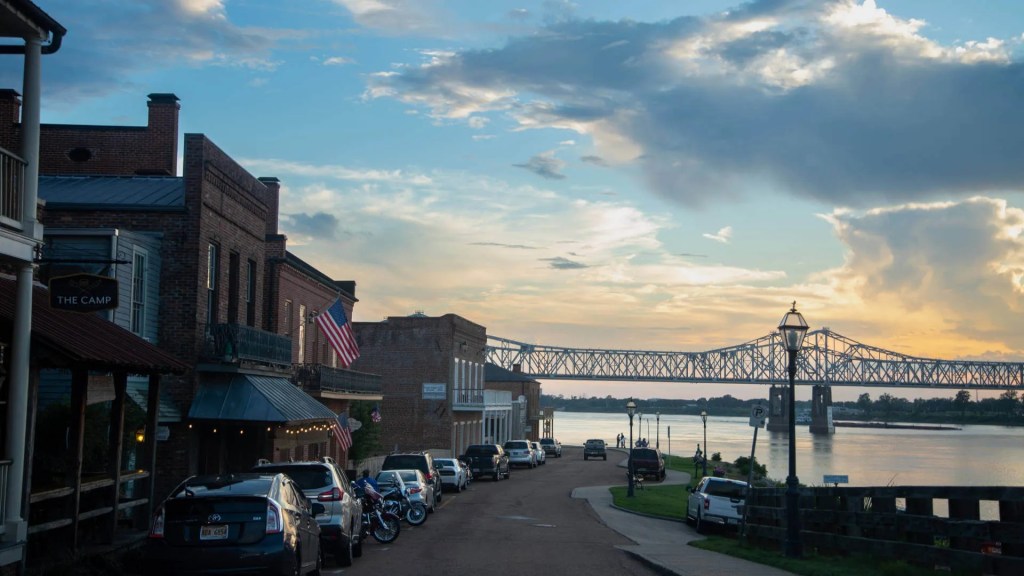
Natchez was the home of William Dunbar and the launching point of both the Dunbar–Hunter Expedition (1804–1805) and the Freeman–Custis Expedition (1806). From this important Mississippi River port, the expeditions set out to explore the newly acquired Louisiana Purchase and to better understand the Red River and its tributaries. Before the Louisiana Purchase, Natchez was a border settlement and the first American city along the Mississippi above the southern boundary of U.S. control at Fort Adams.
South of Natchez along US 61, travelers can see the grave of William Dunbar in his family cemetery, and in the town of Woodville, see a marker honoring the history of the nearby site of Fort Adams.
Today, visitors to Natchez can explore this layered history at Natchez National Historical Park and along the Natchez Trace Parkway, which preserves routes long used by Native peoples, traders, and early American travelers. Together, these sites place the expeditions within a broader story of movement, commerce, and exploration in the Lower Mississippi Valley.
Source: https://explorealexandriapineville.com/listings/epps-house-solomon-northups-gateway-to-freedom/
Alexandria & Pineville
Alexandria and Pineville sit on opposite sides of the Red River. Noted as “Rapides Courthouse” in the journals of the Freeman-Custis Expedition, Alexandria quickly grew into a regional hub because it was a place where people traveling on the Red River had to stop to portage their boats. Its continued importance to navigation is attested by the two Civil War-era forts which make up Forts Randolph and Buhlow State Historic Site.
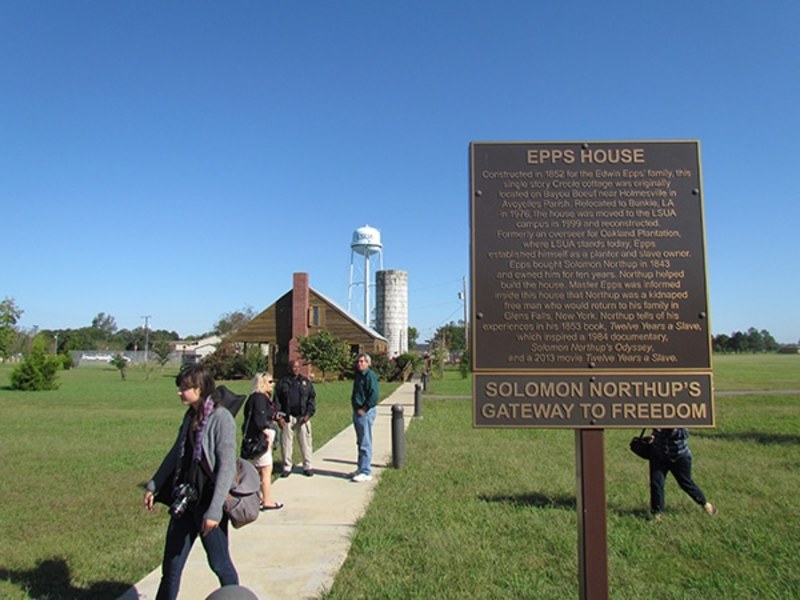
Rapides Parish and neighboring Avoyelles Parish are home to the Northup Trail, a driving trail commemorating the life story of Solomon Northup, a free Black man from New York who was kidnapped and sold into slavery, whose life story was first told in his memoirs, 12 Years a Slave. Northup’s memoirs were made into a Hollywood film of the same name.
Northup’s story recalls the enslaved people who accompanied the Dunbar-Hunter Expedition and the Freeman-Custis Expedition, as well as York, Merriwether Lewis’s slave who accompanied Lewis and Clark. William Dunbar, whose personal wealth came from his plantation, profited from the slaves working his fields while he was on his expedition.
Natchitoches
Last American Outpost on the Red River
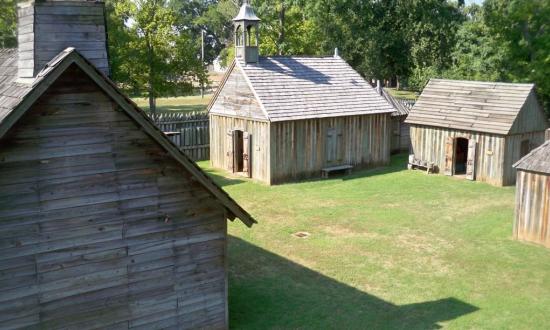
Natchitoches (pronounced “Nack-uh-tish”) was a crucial resupply spot for the Freeman-Custis Expedition. It was where the expedition disbanded after their encounter with Spanish forces.
Today, the part of the Red River along which the expedition traveled through Natchitoches in 1806 is Cane River Lake. The lake goes through the center of the vibrant shopping and dining district of downtown Natchitoches. Follow the expedition’s boats past historic spots like Cane River Creole National Historic Park and Fort St. Jean Baptiste State Historic Site and through the scenes made famous in the film Steel Magnolias.
Natchitoches Convention & Visitors Bureau
Source: https://www.visitshreveportbossier.org/listing/red-river/1157/
Shreveport and Bossier City
The Great Raft Blocks the Way
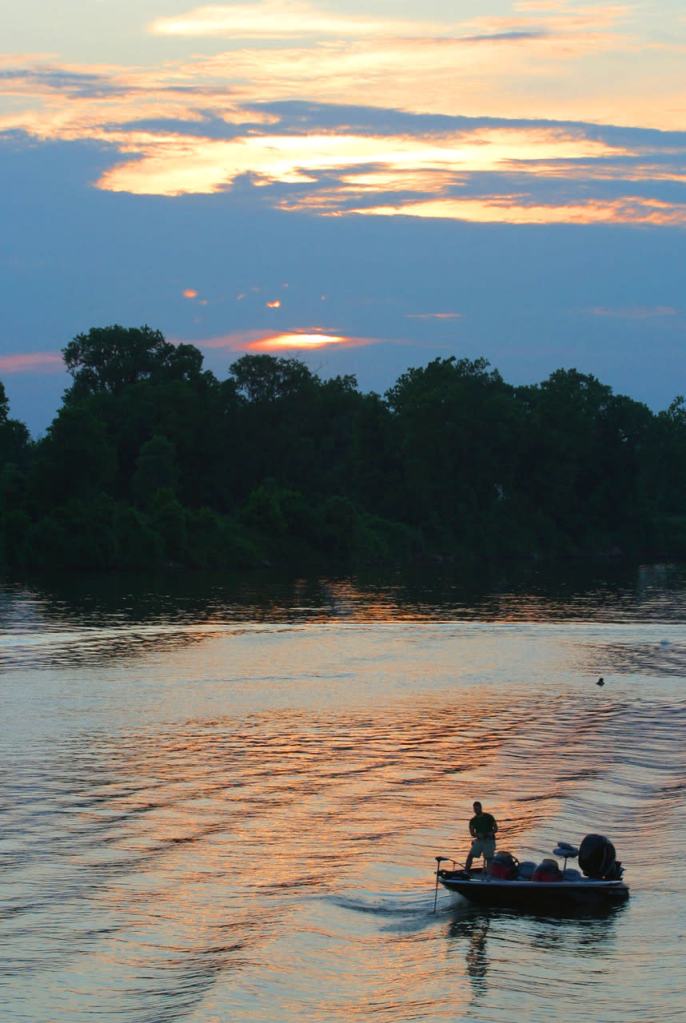
The Freeman-Custis Expedition traveled the long way around through Lake Bistineau, but that doesn’t mean that you should miss these twin cities! Explore the legacy of the Red River at the J. Bennett Johnson Regional Waterway Visitor Center and learn about the natural world next door at SciPort Discovery Center. Multiuse trails such as the Red River Bicycle Trail in Shreveport and the Arthur Teague Parkway Trail in Bossier City provide scenic views of the river. Nearby, Cypress Black Bayou Recreation Area and Lake Bistineau State Park provide access to authentic, wild Louisiana.
Source: Stand in Two States at Once in Downtown Texarkana, Arkansas – Experience Texarkana Arkansas
Texarkana (AR + TX)
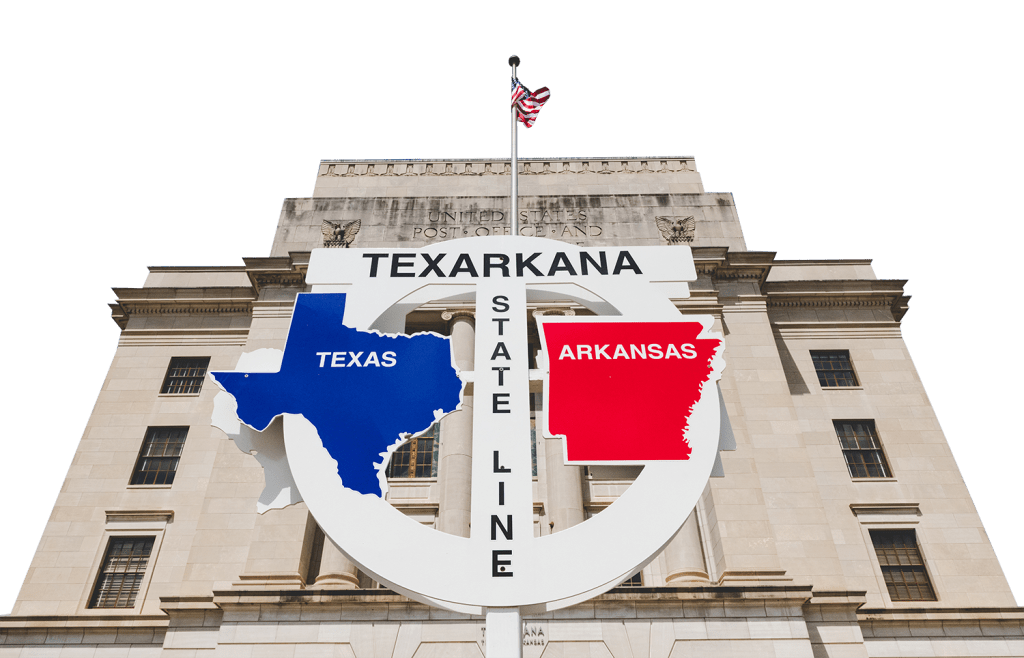
In Texarkana, they like to say they’re “Twice as Nice,” and with two cities with one name, they might be right. In 1806, Freeman and Custis ran into Spanish forces soon after crossing this border–but today, you can stand with one foot on either side and get your picture made! Near the federal courthouse and post office on State Line Avenue, shopping, dining, and attractions abound on both sides of the line. The main campus of the Texarkana Regional History Museum (in Texas) is mere blocks away from the Four States Auto Museum (in Arkansas). Elvis played here, as did Texarkana favorite sons singer Otis Williams (of The Temptations) and ragtime composer Scott Joplin. Two classic films based on local history were filmed here: The Town That Dreaded Sundown and The Legend of Boggy Creek.
Texarkana, Arkansas: Experience Texarkana
Texarkana, Texas: Visit Texarkana (Facebook)
New Boston
Confrontation at the Border
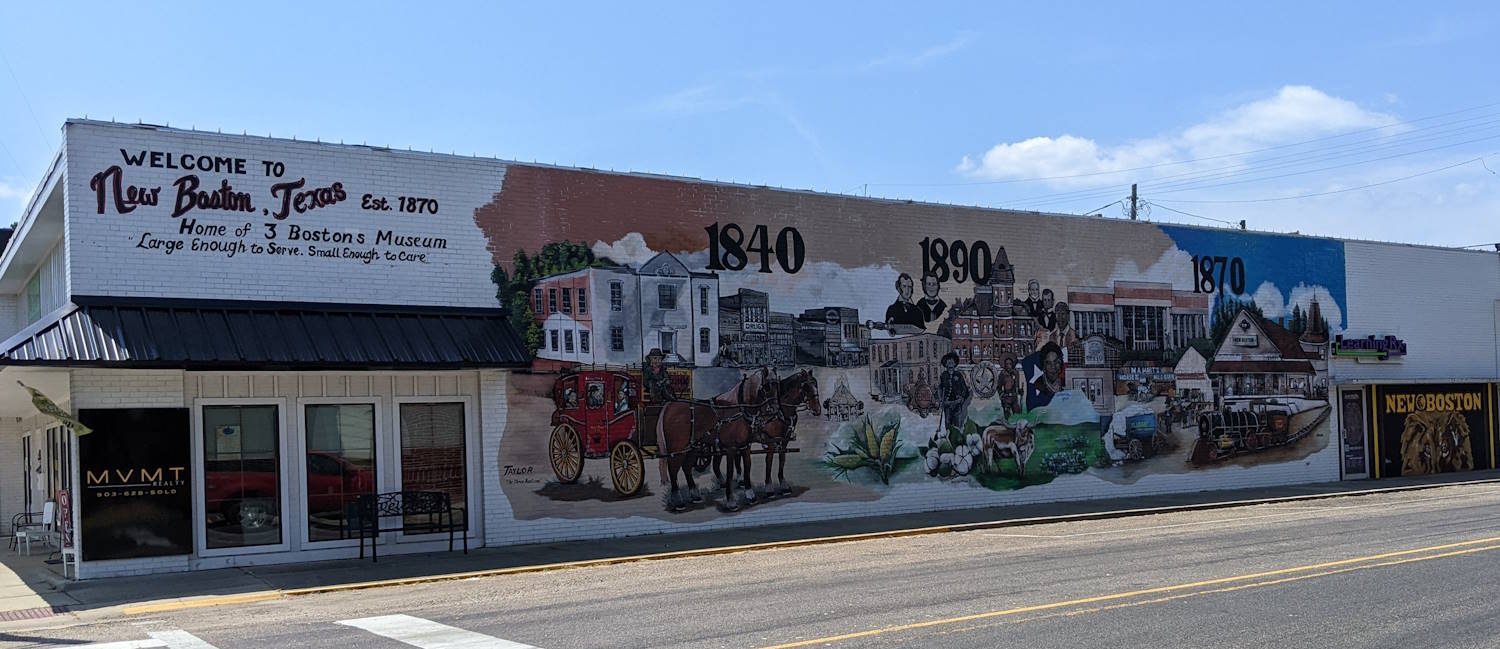
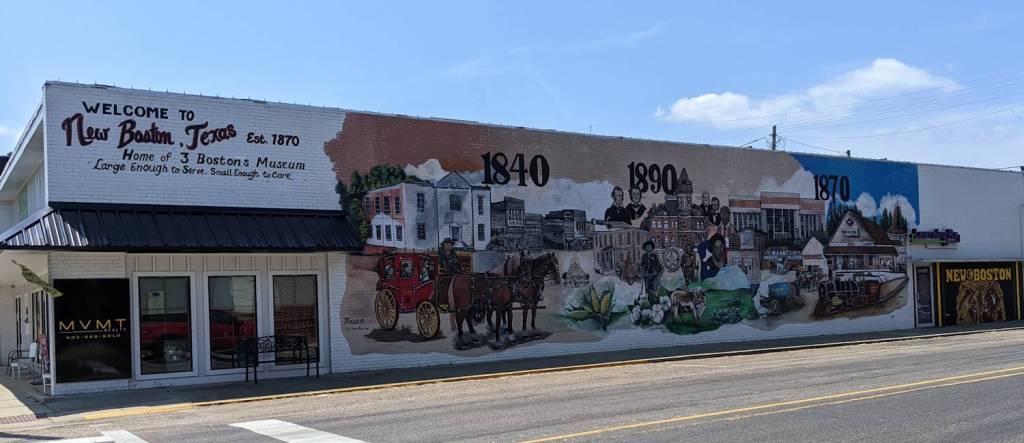
The Freeman-Custis Expedition ended just east of New Boston, Texas. The specific spot is still known today as “Spanish Bluff” from the Spanish soldiers who encountered the American expedition. New Boston boasts a state-of-the-art visitor center/local history museum called “The 3 Bostons Museum” and a thriving downtown with numerous restaurants and retail options. The Northeast Texas Trail (NETT) is a long-distance multiuse trail that begins at New Boston at T&P Trailhead Park and heads east toward Paris and on to Farmersville, near Dallas. Texas Highway 8 crosses the Red River at New Boston
Nacogdoches
Spain’s Response to the Freeman-Custis Expedition
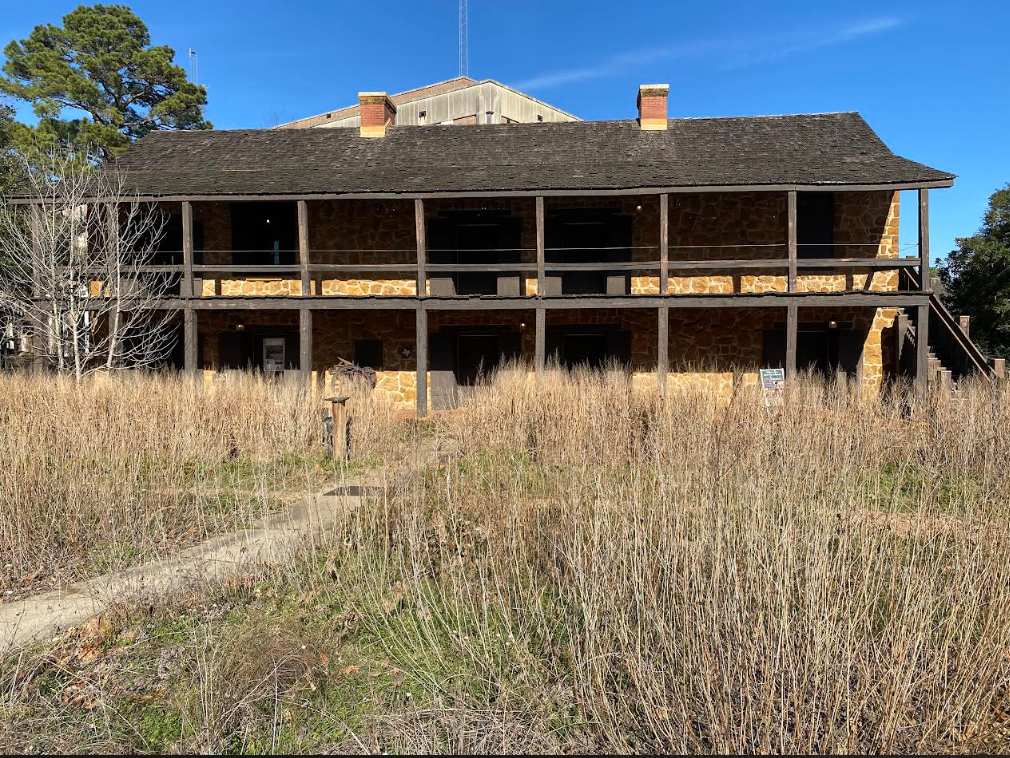
While the Freeman-Custis Expedition did not visit Nacogdoches, the city played a key role in its outcome. From the Stone Fort in Nacogdoches, Spanish officer Francisco Viana planned the armed resistance that ultimately stopped the Freeman-Custis Expedition east of present-day New Boston, Texas.
Though Viana was successful in stopping the Freeman-Custis Expedition, Spain was already losing its grip on Texas. Just six years later, the Gutierrez-Magee Expedition, proclaimed a short-lived “Republic of Texas” from Nacogdoches’s Stone Fort, underscoring the rapidly changing political landscape of the region.
Today, visitors to Nacogdoches can visit a reconstruction of the Stone Fort on the campus of Stephen F. Austin University, as well as at local museums and historic sites that interpret the story of the oldest town in Texas.
 Louisiana Purchase Exploration Trails